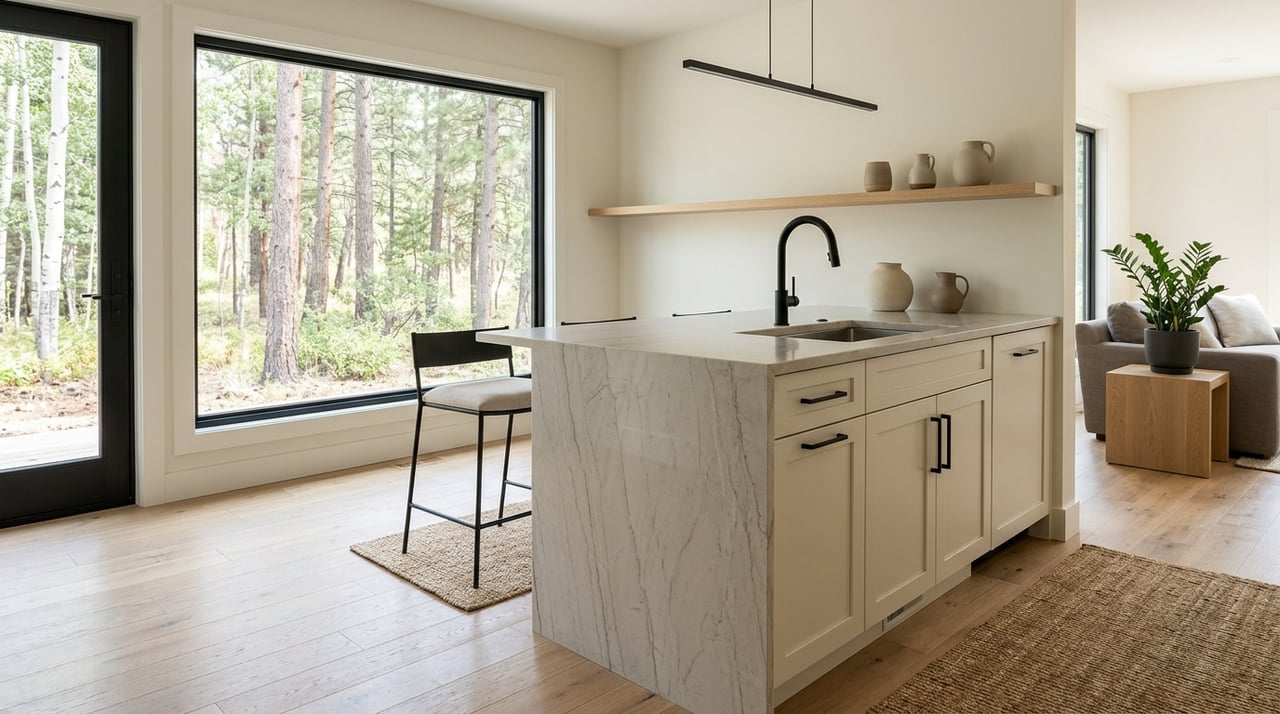
Should You Build or Buy a Grand Mesa Cabin?
July 16, 2026
July 16, 2026
If you have been dreaming about a cabin on the Grand Mesa, one question usually shows up fast: should you build one from the ground up or buy one that already exists? It is an exciting decision, but on the Grand Mesa, it is also a very practical one shaped by access, permits, ownership rules, and wildfire conditions. By the end of this guide, you will have a clearer way to compare your options and decide which path fits your goals. Let’s dive in.
On the Grand Mesa, not every cabin sits on land that works the same way. Before you compare building versus buying, you need to understand what kind of property you are actually looking at.
One major distinction is whether the cabin is on private land or is a Forest Service recreation residence on National Forest System land. In a recreation residence setup, you own the cabin improvements, but not the land itself. That changes what you can do with the property and how a future purchase or remodel may work.
That difference matters even more because the Forest Service says it will not authorize new recreation residences. In simple terms, if you are thinking about building, the legal setup of the property may determine whether building is even an option.
For many buyers, purchasing an existing cabin is the more direct path. The cabin is already there, the site conditions already exist, and you can evaluate the actual setting before closing.
That can be a big advantage on the Grand Mesa, where new construction involves plan review, permits, inspections, and separate well and septic approvals through Mesa County before a new cabin is ready. If your goal is to start using a cabin sooner, buying may feel more predictable.
When you buy an existing cabin, you can see the structure, road access, and overall site in real time. That gives you a clearer sense of what you are getting rather than trying to estimate how raw land will function during construction and after.
This is especially important in a high-country setting where seasonal conditions can affect access and maintenance. A lot that looks easy to use in summer may be much harder to reach later in the year.
If the cabin is a Forest Service recreation residence, you will want to review the permit carefully before closing. The Forest Service is not involved in the actual sale, does not keep a list of cabins for sale, and conducts a transfer inspection when ownership changes.
The agency may also require the cabin and lot to be brought into compliance before a new permit is issued. That means a buyer should look beyond the price and understand the condition and permit status of the property.
An existing cabin may be quicker to buy, but that does not always mean you can change it freely. For Forest Service recreation residences, written approval is required before work begins on items such as roofs, siding, windows, doors, decks, porches, outbuildings, and even paint color.
The approval timeline can range from a couple of weeks to several months. If you are picturing a fast remodel or a highly customized retreat, that extra process should be part of your decision.
Recreation residences are for recreation only. The Forest Service says they cannot be used as a primary residence or for commercial use, and they must be used at least 15 days per year.
If you want a seasonal retreat, that may fit your needs just fine. If you want something with more flexibility, private land may be the better match.
If your priority is customization, building has a clear appeal. You can design the layout, choose the finish level, and plan for how the cabin performs in a high-elevation environment.
That said, building on the Grand Mesa comes with more moving parts. It is not just about the floor plan. It is also about approvals, utilities, site feasibility, and timing.
Mesa County’s residential plan review checklist shows how detailed the process can be. Submittals may include a completed application, assessor form, foundation plan, scaled floor plan, thermal envelope, energy-code checklist, framing plans, stair details, and heating-appliance information.
Mesa County also says enforcement of the 2024 International Building Code and 2021 International Energy Conservation Code began on September 1, 2025. That means new construction is shaped by current code requirements from the start.
For raw land, utilities are often one of the biggest practical hurdles. Mesa County’s OWTS regulations require permits and inspections for on-site wastewater systems, and the current permit fee for a new, repair, or remediation system is $550.
For water, the Colorado Division of Water Resources handles permits to construct a new or replacement well. Before you get too attached to a parcel, it is wise to understand whether those basic systems are realistic for the site.
Mesa County states that new-construction permit fees are based on valuation data, with other fees depending on project scope. That means the total cost of building is not just the cabin itself.
Site work, utility approvals, wastewater systems, and other project-specific items can all affect the budget. A lot that seems affordable at first glance may require more investment to become build-ready.
Financing can also separate building from buying. Building often involves a different lending path than a standard purchase of an existing cabin.
That matters because timing, loan structure, and cash flow can all feel different during a build. If you are comparing the two options, financing should be part of the conversation early.
On the Grand Mesa, site selection is not just about views and trees. The land itself, the road to it, and the surrounding conditions may have a bigger impact on your decision than the cabin design.
This is one reason some buyers choose an existing cabin over raw land. The known conditions can reduce surprises.
GMUG road reports show that many Grand Mesa routes are not accessible by full-size vehicles, and some are gated or seasonally closed until road conditions improve. That can affect not only your day-to-day use, but also construction scheduling, deliveries, maintenance, and emergency access.
If you are considering either a cabin purchase or a build site, confirm how the property functions across seasons, not just on the day you visit it.
Mesa County says the sheriff enacts fire restrictions when conditions are extremely dry. Those restrictions are based on vegetation moisture, weather outlooks, human risk factors, and firefighting resource availability.
The county also warns that wildfire can create flash-flood and debris-flow risk for years after a burn, even in areas that are not normally flood-prone. That makes wildfire exposure part of both your short-term use and your long-term planning.
Whether you are leaning toward building or buying, a careful due-diligence checklist can save you time and stress. On the Grand Mesa, these basics matter.
If several of those items are uncertain, buying an existing cabin may offer more clarity. If those answers are solid and you want a custom result, building may be worth the extra effort.
Buying an existing cabin often fits you best if you value speed, certainty, and the ability to inspect the exact site and structure before closing. It can be a practical choice when you want fewer unknowns and a faster path to enjoying the property.
Building often fits you best if you want more control over the layout, materials, and performance of the cabin. It can be a strong option if you are comfortable managing permits, utility planning, financing details, and the realities of high-country access.
On the Grand Mesa, the real question is usually not just build or buy. It is whether the ownership model, access pattern, and permit path of a specific property support your goals.
If you are exploring cabins, land, or high-country property in Mesa County, working with local guidance can make the comparison much clearer. Kelley Griffin offers hands-on support backed by local market knowledge and practical insight into land, access, and property potential.
Stay up to date on the latest real estate trends.

Blog
Why now might be the best time to buy
Blog
A local look at the lifestyle, community, and livability that set Fruita apart
Blog
Life with three little boys is naturally a bit wild.
Blog
A family's dream cabin on the Grand Mesa becomes a reality.
We live, work, and serve in the community we love. Our deep market knowledge means smarter pricing, stronger offers, and confident decisions.
THE GRIFFIN TEAM
COLDWELL BANKER DISTINCTIVE PROPERTIES
Agent phone: 970-589-6555
Office Phone: 970-243-0456
131 N. 6th Street Grand Junction, CO 81501