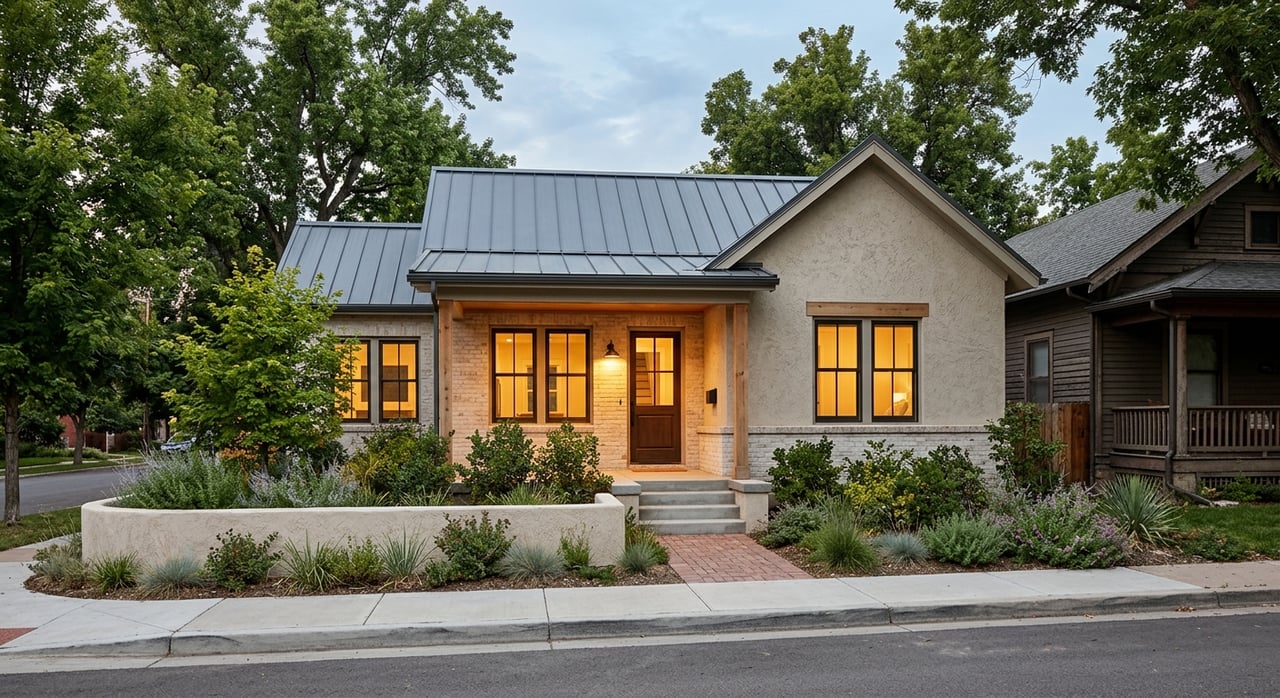
Downtown Grand Junction Living: Homes, Vibe & Access
June 4, 2026
June 4, 2026
If you want a home base with restaurants, art, trails, and everyday services all within easy reach, living near downtown Grand Junction deserves a close look. This part of the city offers a different feel than a typical neighborhood with larger lots and quieter residential streets. In this guide, you’ll get a practical look at the downtown vibe, the kinds of homes you’re likely to find, and how access really works day to day. Let’s dive in.
Downtown Grand Junction has a true mixed-use feel. It is the Grand Valley’s central activity hub, with a pedestrian-friendly street grid, locally owned restaurants and shops, and a strong arts-and-culture identity. It also functions as a service core, so everyday errands and professional services are part of the downtown experience, not separate from it.
If you like being near activity, this can be a major plus. Downtown is set up as a place to live, work, and spend time, which gives it a more urban feel than many other parts of the Grand Valley. That does not mean it feels like a big city, but it does mean you will likely notice more movement, events, and mixed uses around you.
One of the biggest reasons downtown feels lively is its event calendar. First Friday Art Walks, street festivals, Art on the Corner, and Market on Main all add regular energy to the area. Market on Main is described as a summer-long signature event that draws an estimated 5,000 visitors per week.
The creative identity is also built into the district itself. GJ Creates’ creative district roughly runs from 1st Street to 10th Street and from Grand Avenue to the Colorado River, which closely matches downtown. If you enjoy public art, local events, and a neighborhood with visible culture, that can be a meaningful part of daily life here.
Downtown Grand Junction is not only about shops and events. It is also closely tied to the riverfront and trail system, which is a big draw for many Grand Valley buyers. Las Colonias Park sits next to downtown along the Colorado River and connects to the Riverfront Trail system.
The city’s Dos Rios project adds to that story with a 58-acre mixed-use riverfront development that includes parks, trail access, and direct downtown adjacency. For buyers who want a more active lifestyle, that blend of city convenience and outdoor access is one of downtown’s strongest advantages.
If you are picturing only lofts above storefronts, downtown Grand Junction is broader than that. The city’s MU-3 Downtown district is designed for highly walkable retail, service, office, lodging, and mixed uses, with storefronts at street level and residential or office space above. The code also emphasizes preserving downtown’s historic character, which helps explain why the area feels layered rather than uniform.
In practical terms, living near downtown can mean several different housing styles. You may find loft or loft-style apartments, flats, townhomes, row houses or brownstones, and live-work lofts. That variety is part of what makes the area appealing for buyers who want something with more personality than a typical suburban subdivision.
A downtown housing study prepared for the Downtown Development Authority called for a broader product mix than downtown had historically offered. That helps frame what you will see today. Instead of one dominant housing type, downtown and nearby blocks can include different building ages, layouts, and living styles.
For some buyers, that variety is a feature. You may prefer a residence with architectural character, a compact footprint, or a location close to restaurants and events. If your priority is a large yard or a more conventional detached-home setting, you may find a better fit outside the core.
Historic fabric is an important part of the downtown area. The city’s historic preservation board highlights places like the North Seventh Street Historic District, the Railroad Depot, the Avalon Theater, and the St. Regis Hotel as notable parts of Grand Junction’s past. For you as a buyer, that means some nearby housing stock may lean older and more architectural rather than brand-new.
That can create real appeal if you value character and location. It can also mean you should look carefully at condition, updates, and long-term maintenance needs when comparing properties. This is an area where local guidance can be especially helpful, particularly if you are considering a historic home or a property with renovation potential.
The downtown story is still evolving. In 2025, the City Council adopted a resolution supporting The Terminal project, a mixed-use redevelopment in the heart of downtown with 106 workforce apartments, more than 13,000 square feet of retail, and a Space to Create arts facility.
That matters because it reinforces the direction of the district. Downtown Grand Junction is continuing to build around the idea of housing, commerce, and culture existing side by side. If you are buying with an eye on long-term lifestyle and future momentum, that is worth paying attention to.
For many buyers, access is where downtown stands out most clearly. You are not only close to restaurants and services. You are also near major recreation corridors, transit options, and regional connections that can make daily life easier.
This is one of the few parts of the Grand Valley where so many amenities overlap in a compact area. If you want to walk, bike, or use transit more often, downtown gives you more ways to do that than many other local living options.
The Monument Trail connects downtown’s riverfront trail network to the Lunch Loop and Jurassic Flats area and forms part of the 10-mile Redlands Loop. That creates a paved route for walkers, runners, cyclists, and commuters. For outdoor-minded buyers, this is a meaningful convenience, not just a nice extra.
The city also notes that downtown sits about two miles from Colorado Mesa University and Colorado National Monument, and less than 10 miles from I-70. That makes it easier to move between in-town living and regional travel without feeling cut off from either.
Transit is more usable here than many people expect from a smaller Western Slope downtown. Grand Valley Transit operates 11 fixed routes plus a 12th pilot route connecting Grand Junction, Fruita, Palisade, and parts of unincorporated Mesa County. The downtown operations facility is located at 525 South 6th Street and is open Monday through Saturday from 5:00 a.m. to 8:30 p.m.
Mesa County also notes that Bustang and Bustang Outrider service stop downtown. That adds another layer of regional access beyond the Grand Valley. If you want options beyond driving everywhere, downtown offers more flexibility than many other parts of the area.
Even in a walkable district, parking still matters. Downtown Grand Junction offers more than 1,100 metered spaces, 68 time-limited spaces, and a 434-space parking garage on Rood Avenue. Parking is free outside Monday through Friday from 8 a.m. to 4 p.m., and on weekends and holidays.
That is helpful if you are weighing convenience realistically. Downtown living may reduce how often you need to drive for dinner, errands, or events, but access for visitors and daily parking still remains part of the setup.
Downtown Grand Junction is best understood as the Grand Valley’s most urban-feeling base. The city’s zoning, amenities, transit, trails, and current development all support a more active mixed-use environment rather than a purely residential one. If that sounds appealing, downtown may feel like a natural fit.
Many buyers are drawn here because they want to walk to dinner, catch an art walk, or get on a trail without making every outing a car trip. Others decide they would rather have more separation from activity, a larger yard, or a quieter residential pattern. Neither choice is better. It simply depends on how you want your home and daily routine to work together.
Downtown-adjacent living often appeals to buyers who value convenience, character, and connection. That can include professionals who want a central location, relocators who want to plug into the Grand Valley quickly, and outdoor-focused buyers who like having trails and riverfront access close by.
It can also appeal to buyers looking at historic homes or mixed-use areas with long-term interest. Because the housing mix is less standardized, the right fit often comes down to your comfort with tradeoffs like lot size, age of home, and activity level.
If you want a compact, amenity-rich part of Grand Junction where housing, culture, recreation, and mobility overlap, downtown offers a lot to consider. It gives you a lively setting, a broader mix of housing types, and strong access to both city services and outdoor assets. For the right buyer, that combination is hard to match elsewhere in the Grand Valley.
If you are comparing downtown with other Grand Junction neighborhoods, it helps to talk through your day-to-day priorities before you start touring homes. The right area is not only about price or square footage. It is about how you want to live once you move in.
If you want help sorting through downtown Grand Junction, nearby historic areas, or other Grand Valley neighborhoods, Kelley Griffin offers hands-on local guidance to help you find the right fit for your lifestyle and goals.
Stay up to date on the latest real estate trends.

Blog
Why now might be the best time to buy
Blog
A local look at the lifestyle, community, and livability that set Fruita apart
Blog
Life with three little boys is naturally a bit wild.
Blog
A family's dream cabin on the Grand Mesa becomes a reality.
We live, work, and serve in the community we love. Our deep market knowledge means smarter pricing, stronger offers, and confident decisions.
THE GRIFFIN TEAM
COLDWELL BANKER DISTINCTIVE PROPERTIES
Agent phone: 970-589-6555
Office Phone: 970-243-0456
131 N. 6th Street Grand Junction, CO 81501