Dreaming of a quiet slice of the Grand Mesa where you can unplug, ski powder, and watch the alpenglow from your porch? You’re not alone. Buying land or a cabin up here can be a smart lifestyle move and a solid long-term hold, but mountain properties come with unique rules and risks that are easy to miss.
In this guide, you’ll learn the key steps to vet access, water and septic, utilities, snow loads, wildfire risk, insurance, and title items before you write an offer. You’ll also get a practical checklist and see how working with construction-aware, local representation keeps you protected. Let’s dive in.
Grand Mesa basics that shape your buy
Grand Mesa is true high country. Winter is real, roads can close, and services thin out fast once you leave the main highway. Plan for travel time, deeper snow, and a mountain building environment.
- The primary road is Colorado State Highway 65, the Grand Mesa Scenic Byway. It is state maintained, though conditions can change quickly in winter. You can review seasonal details through the Colorado Department of Transportation’s Grand Mesa byway page for context on closures and travel tips. Check the Grand Mesa Scenic Byway overview.
- Inside the plateau, many spurs are Forest Service routes with seasonal gates and closures. If your practical access depends on one of these roads, confirm when it’s open and who maintains it. See the GMUG road and lake updates to understand how routes open and close. See GMUG road and lake status resources.
- Snow is a defining feature. Powderhorn’s long-term averages give you a sense of what the north slopes see each season. Expect high snow and wind loading at elevation. Review Powderhorn’s snowfall context.
Access and road maintenance: verify in writing
Year-round access is not guaranteed just because you can drive there in July. You must confirm both legal and practical access.
- Confirm legal access. Your title commitment and recorded plat should show an easement or right-of-way if the road is private. If it is missing, treat that as a red flag.
- Confirm who maintains and plows the road. Some private roads rely on informal neighbor agreements. Look for a written road maintenance agreement or HOA provisions in recorded documents.
- Confirm seasonal operations. If access uses Forest Service segments or gated spurs, ask about seasonal closures and snow removal. Use the GMUG road and lake status resource and the CDOT Grand Mesa byway page to understand broader patterns.
Why it matters: If you need consistent access for personal use, rentals, or insurance, a parcel that is landlocked or unplowed in winter can stay idle for months and impact your plans.
Water: wells and other sources
Water is often the single biggest factor in whether you can build or live year-round.
- Pull the well permit file. The Colorado Division of Water Resources (DWR) maintains the authoritative records. The file lists allowed uses, pumping limits, and any augmentation conditions. Access DWR’s well-permitting resources.
- Confirm there is a permitted source. If there is no permitted well, plan for a new permit review and drilling timeline. If a property uses hauled water or a cistern, confirm the setup and delivery logistics.
- Understand use limits. Some domestic wells have strict limits on outdoor use and are junior to other water rights. Always verify which rules apply to your parcel through DWR records.
Tip: Ask the seller for the well permit number early. If they do not have it, assume you will need to verify everything directly with the state.
On-site wastewater (septic/OWTS) in Mesa County
Mountain soils, frost, and terrain often require engineered systems. Mesa County regulates on-site wastewater systems and recently updated its rules.
- For any existing system, request the septic permit and as-built. If they are missing, include a contingency for a site evaluation and percolation testing.
- For new systems, expect site-specific evaluation and professional design. Alternatives like mound systems or advanced treatment may be required at elevation.
- Review the current rules so you understand submittals, testing, and approval steps. Read Mesa County’s updated OWTS regulation.
Why it matters: If a lot cannot support a permitted OWTS, your use may be limited to seasonal or non-residential purposes until you find a compliant path.
Utilities and internet: confirm at the lot line
Service on the Mesa is patchy. Some areas have co-op power and active clusters of homes, while others are off-grid.
- Ask for utility availability letters from providers. Confirm whether there is an existing meter or transformer at the property line and if a line extension would be required.
- Verify exact pole and line easements across the parcel. These details should appear in the title commitment and the recorded plat.
- If you plan to work remotely, test cell and satellite options on-site. Coverage can be inconsistent on the plateau.
If you are going off-grid, plan for solar plus battery, propane, and a backup generator sized to seasonal loads. Match your system to winter realities.
Snow, structure, and foundation planning
High-elevation snow and freeze-thaw cycles demand careful structural design.
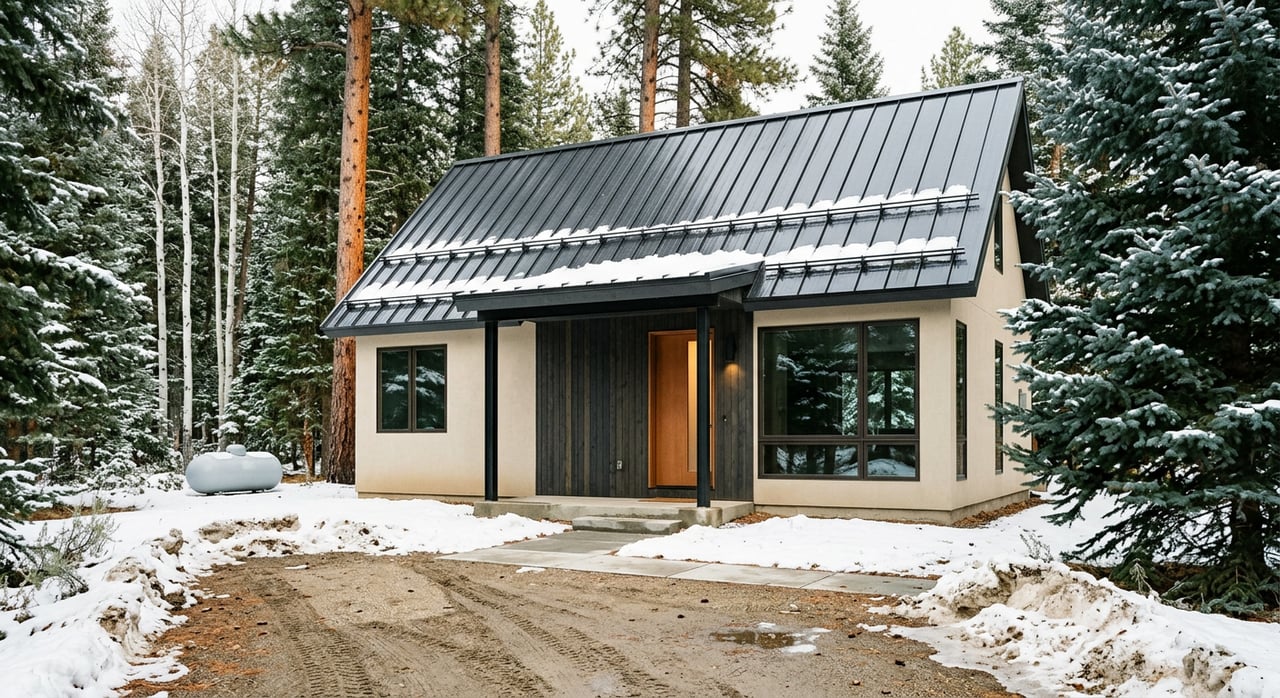
- Roofs need to handle roof snow loads and drift. Do not assume an older cabin meets current standards. Ask for structural calculations or a roof inspection and engineer’s letter.
- Expect a geotechnical report before building. Foundation type and frost depth are site specific at elevation.
- Mesa County adopts building codes that guide design and review. Knowing the adopted code helps you and your engineer set the right design targets. See Mesa County’s code adoption summary.
For snow context, Powderhorn averages roughly 250 inches per season, which hints at the loads your roof and access will face. Review Powderhorn’s snowfall context.
Wildfire readiness and insurance basics
Forest cover and mountain terrain require proactive mitigation. Insurance availability and pricing also hinge on use patterns and risk.
Title, minerals, zoning, and covenants
Title details matter a lot on the Mesa. Split estates and private roads are common.
- Mineral rights may be reserved. A split estate means the surface and minerals are owned separately. If mineral rights are important to you, ask for a mineral-specific title review and legal counsel. Learn how mineral reservations can affect surface owners.
- Confirm recorded road and utility easements. These should show clearly in your title commitment and on the plat.
- Check zoning and permitted uses. For parcels in unincorporated Mesa County, contact Community Development to verify zoning, setbacks, and subdivision constraints. Visit Mesa County Community Development.
- Review CC&Rs if the parcel sits in a subdivision. Covenants can influence building types, rental rules, and road maintenance obligations.
Your pre-offer due-diligence checklist
Request from the seller or listing agent early:
- Title commitment, recorded deed, and plat. Ask the title company to list mineral reservations and all recorded easements.
- Seller property disclosures with well and septic details.
- Well permit number and the DWR well-permit file. Use DWR’s portal to verify records.
- OWTS permit, percolation tests, and as-built. Review Mesa County’s OWTS regulation.
- Utility availability letters and location of any meter, transformer, or line extension requirement.
Build smart contingencies into your offer:
Timing tips:
- Title and mineral review: 10 to 21 days.
- Water and septic feasibility: 30 to 60 days, accounting for permit reviews and contractor scheduling.
- Winter access: schedule a winter visit or hire a local inspector to verify real conditions.
How local, construction-aware representation helps you
Buying mountain property is part paperwork, part practical fieldwork. A hands-on team that knows Mesa County and the Grand Mesa can save you time and protect your budget.
- Coordinated outreach. An experienced agent can quickly connect you with Mesa County planners and health staff for zoning and OWTS questions. Start with the county’s planning page.
- Technical eyes on site. A construction-savvy advisor helps you spot snow-load concerns, foundation risks, and access issues that photos do not show.
- Contract discipline. Clear contingencies for access, water, septic, title, and insurance give you controlled exit points if something does not pencil.
Next steps
If a Grand Mesa parcel or cabin is calling your name, line up your due diligence before you fall in love. Verify access in winter, pull well and septic files, confirm utility realities, and budget for mountain-grade upgrades. With the right plan, you can secure a cabin or lot that fits both your lifestyle and your risk tolerance.
Ready to start with a shortlist and a clear inspection and permitting roadmap? Connect with Kelley Griffin for concierge-level buyer representation backed by deep local knowledge and practical construction insight.
FAQs
What should I check first when buying a Grand Mesa cabin?
- Start with access, water, and septic. Confirm year-round road access and who plows, pull the DWR well-permit file, and verify Mesa County OWTS permits or feasibility.
How do I confirm if a Grand Mesa lot has legal access?
- Review the title commitment and recorded plat for an easement or right-of-way, and ask for any road maintenance agreement. For seasonal context, consult GMUG and CDOT resources.
Can I rely on a cistern or hauled water for a Mesa cabin?
- Many owners do for seasonal use, but year-round living usually depends on a permitted well. Always verify the water source and permitted uses through DWR records.
What septic rules apply on the Grand Mesa in Mesa County?
- Mesa County regulates on-site wastewater and requires site-specific evaluations and permits. Engineered solutions are common at elevation under the county’s updated OWTS rules.
How does snow affect construction and maintenance costs?
- High snow and wind loads drive structural design requirements. Expect engineered roof loads, possible foundation adaptations for frost, and regular snow management for access.
Will wildfire risk affect my ability to get insurance?
- It can. Carriers weigh wildfire exposure and vacancy status for seasonal cabins. Create defensible space and get quotes early to confirm coverage and price.
What should I know about mineral rights on Mesa properties?
- Colorado often has split estates. Ask your title company to flag mineral reservations and consider a mineral-specific review if ownership or potential development is a concern.